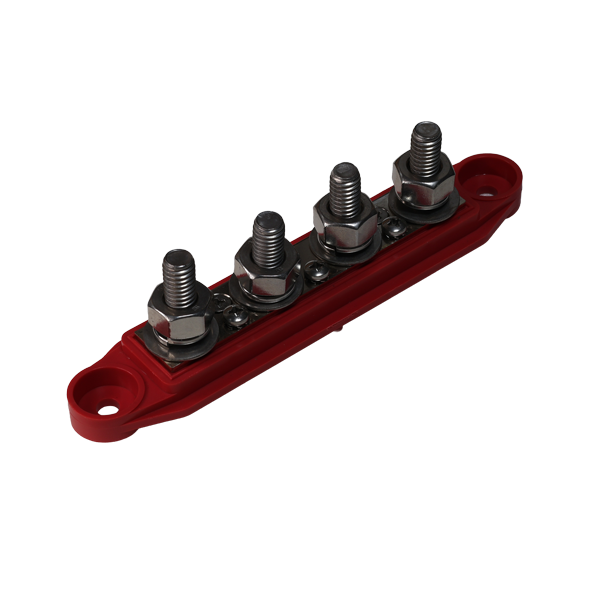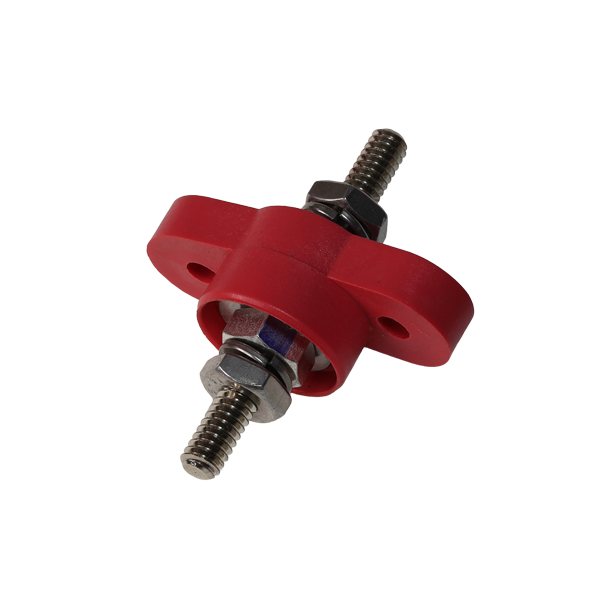

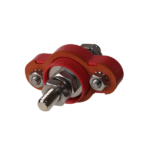
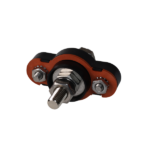
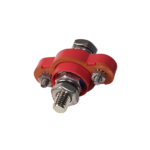
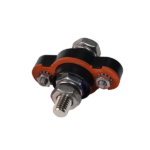
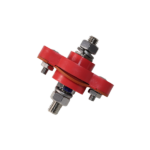
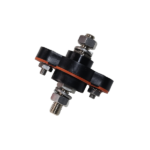
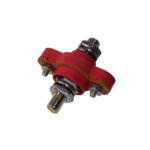
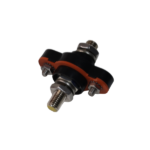
Small Power Bushing – Waterproof
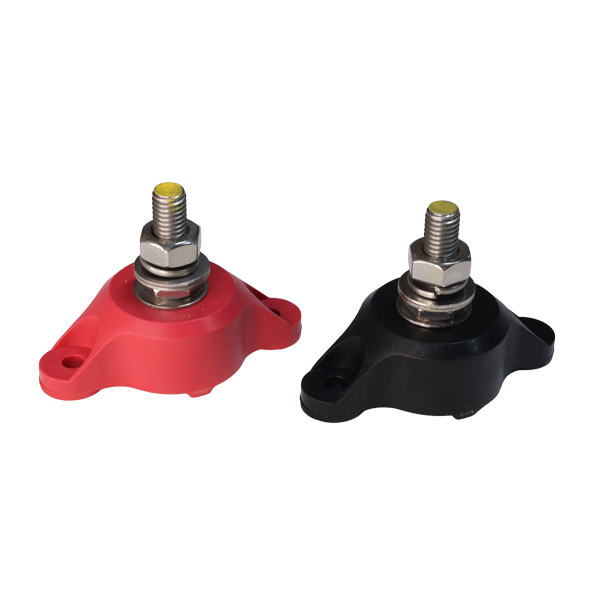
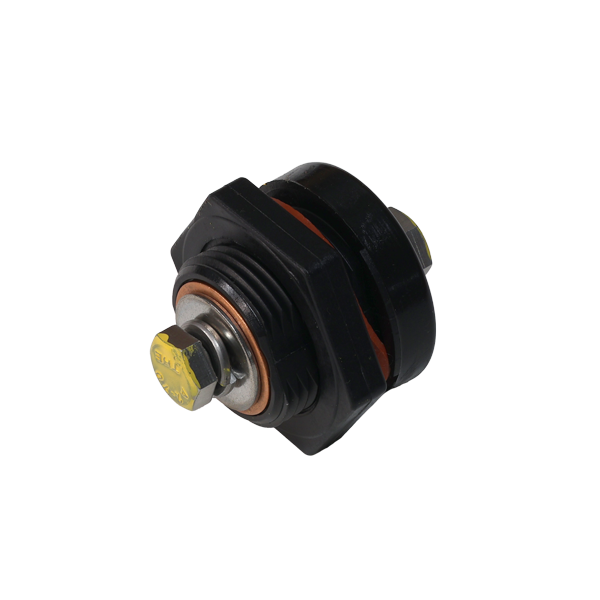
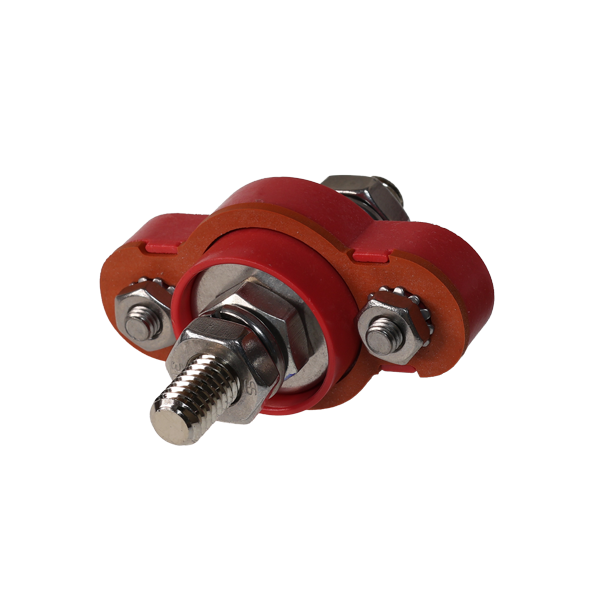
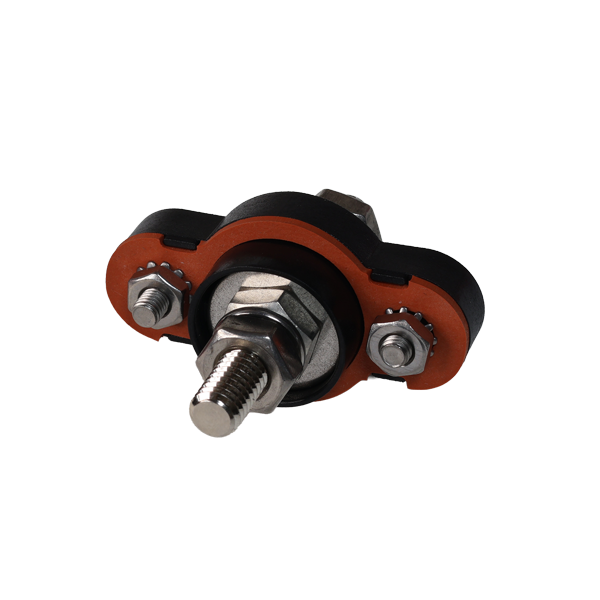
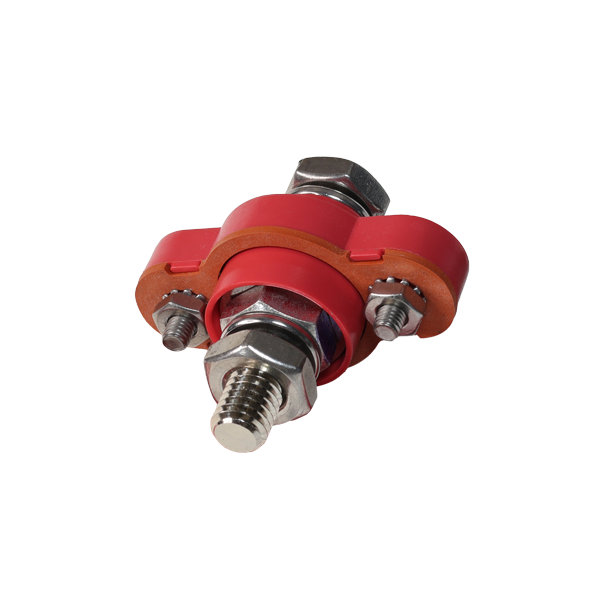
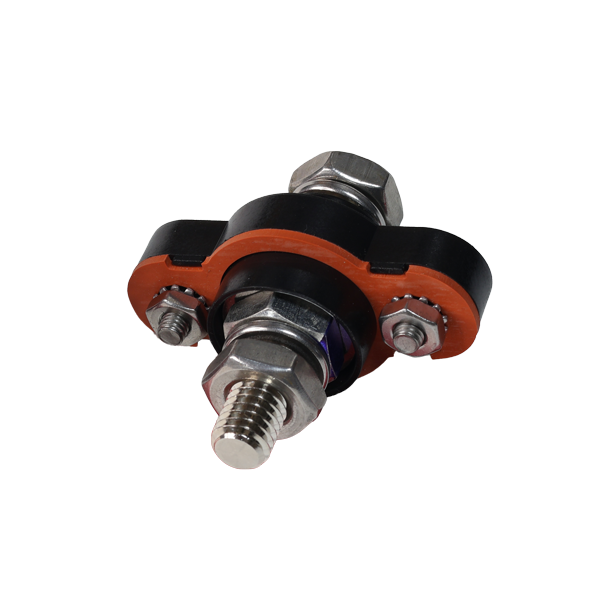
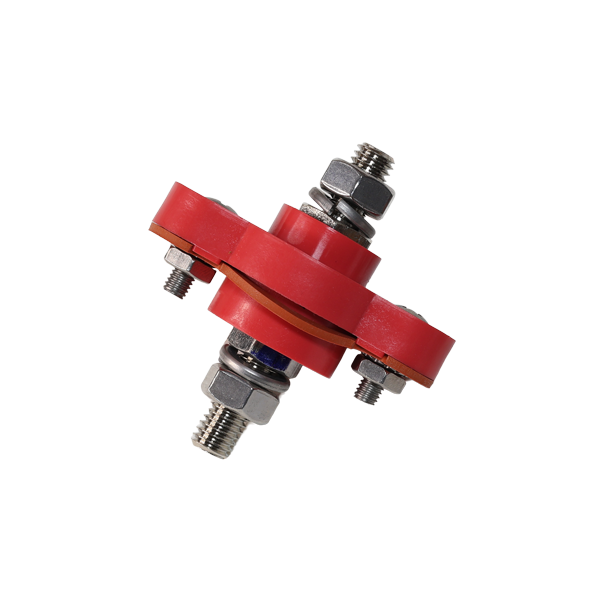
Small Power Bushing -Waterproof allows for extension of power lines, while also allowing current to pass through a panel. This waterproof solution passes IP67 for dust and fluid prevention.
$0.00
Product details
Small Power Bushing – Waterproof
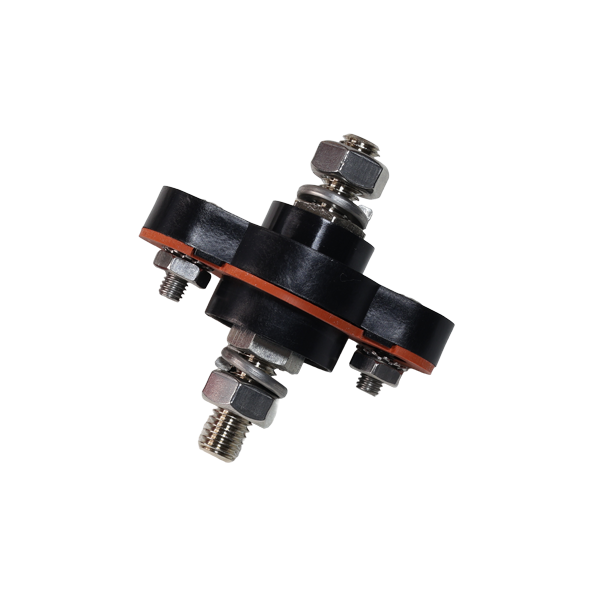
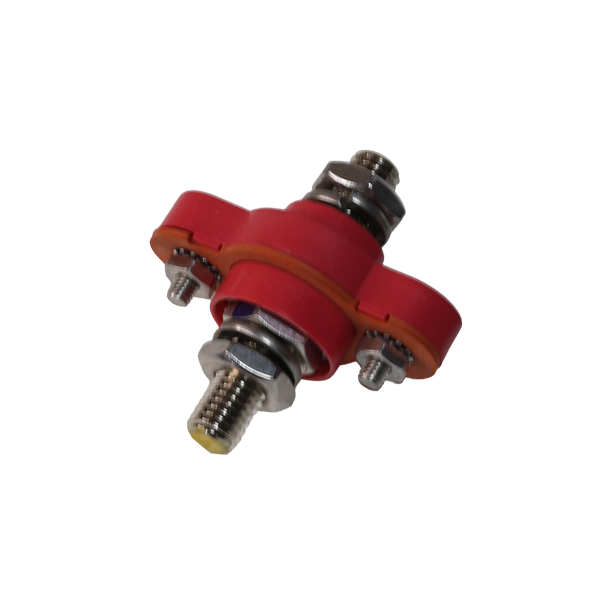
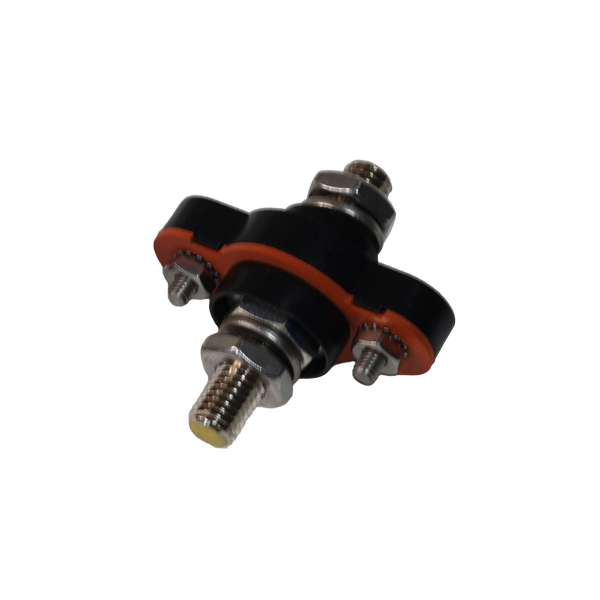
VTE took our single point power post, and gave it a facelift. The Small Power Bushing can extend power lines as well as pass current through a panel. The Small Power Bushing line offers post size of 5/16″, 3/8″ and 8mm, and has 2 classes for commercial and marine applications.
- Pass current through a panel
- Used to connect two or more voltage lines
- Hook up negative return lines to single cable
- Waterproofing elements
- Silicone gasket against panel
- Internal O-Ring
- Sealing mounting screws
- Post: Nickel Plated Brass
- Conductive Nut: Tin Plated Brass
- Washers: Stainless Steel
- Fastening Nuts: Stainless Steel
- Terminal insulators can be used to protect against weather and accidental shorts:
- 'Top' side boss: 220 Series
- Larger 'bottom' boss: 224 (tight) or 226 (snug)
| 5/16" | 77231W02 | Red |
| 77231W14 | Black | |
| 3/8" | 77237W02 | Red |
| 77237W14 | Black | |
| 8 mm | 77208W02 | Red |
| 77208W14 | Black | |
| 10 mm | 77210W02 | Red |
| 77210W14 | Black |
Blue Dot Technology
Conductive vs. Hi-Strength Retaining Nuts
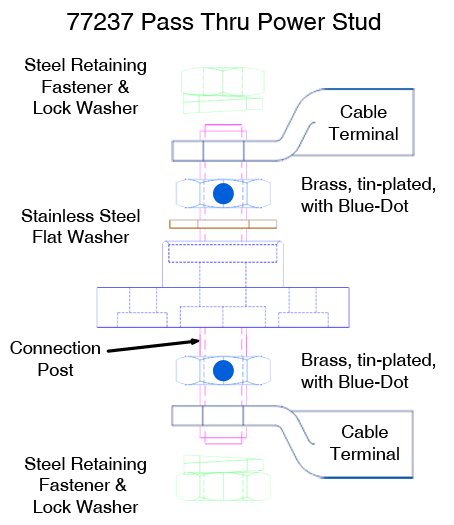
VTE Inc. uses two type of retaining fasteners:
- Conductive Fasteners
- Mechanical Fasteners
Conductive Fasteners
Our conductive fasteners are used where current will pass through the fastener. The electrical properties are such that conductivity is superior to mechanical fasteners.
- Using copper as a standard:
100%
- - Brass conductivity: 37%
- - Stainless steel conductivity: 2.4%
Mechanical Fasteners
Our retaining fasteners are used where current does not need to pass through the fastener. An example of this would be at the end of a connection post, to tighten an assembly.
Some key points:
- Conductive nuts include: brass, tin-plated brass. On some bus material: nickel-plated brass. Brass is used for its superior conductivity to stainless steel.
- Mechanical nuts: stainless steel, steel. Steel is used to tighten, or torque an assembly. Steel is much harder, and can handle higher torque before distortion.
- Brass and copper are more expensive than steel, and are only used where conductivity is required.
- Brass (or plated) nuts are marked by VTE with a Blue Mark. This is to notify the installer that the fastener is for conductivity positions only.
- Conductivity nuts are installed by the factory, and must be left in their original position.
- When installing multiple lug or ring terminals, washers are not recommended between terminals.
Related Products